
Staying competitive in today’s fast-moving gaming landscape means keeping up with more than just patch notes and release dates. Players are searching for reliable updates on Gamefront news, smarter multiplayer tactics, in-depth console and PC reviews, and a clearer understanding of Lightnite battle royale mechanics. This article is designed to meet that need—delivering focused insights, practical strategies, and timely analysis that help you play smarter and stay ahead of the curve.
We break down complex gameplay systems into actionable tips, highlight key updates that actually impact performance, and connect the dots between emerging gaming technology trends and real in-game advantages. Every recommendation is grounded in hands-on testing, active multiplayer experience, and careful review of the latest developments across platforms.
If you want clear strategies, sharper decision-making, and up-to-date insights that translate directly into better matches and smarter loadouts, you’re in the right place.
The Next Level: How Technology is Reshaping the Gaming Universe
As these emerging gaming technology trends reshape online matches, players seeking to enhance their experience may want to explore innovative updates, like those discussed in our article on How to Update Lightniteone.
The gaming landscape isn’t just leveling up—it’s rewriting the rules. Today’s gaming technology trends go far beyond prettier graphics. We’re talking AI-driven NPCs (non-playable characters that adapt to your choices), cloud streaming that removes hardware barriers, and VR worlds that feel startlingly real.
So what’s in it for you? Smarter enemies, shorter load times, cross-platform play with friends, and more immersive storytelling. Developers benefit too, building richer worlds faster. While some argue these shifts are hype cycles, the practical payoff is clear: more access, deeper engagement, and games that evolve alongside you.
Generative AI is transforming game worlds from scripted playgrounds into living systems. In the past, NPCs (non-playable characters controlled by the game) followed rigid dialogue trees: ask question A, get answer B. Now compare that with Large Language Model–driven NPCs. Instead of repeating canned lines, they remember your past choices, reference earlier battles, and even generate new quests on the fly. It’s the difference between talking to a theme park animatronic and debating strategy with a party member who actually listens. Skeptics argue this unpredictability could break narrative pacing. Fair point. However, when designed with guardrails, dynamic NPCs create immersion that static scripts simply can’t match.
Similarly, Procedural Content Generation (PCG) has evolved. Old-school PCG meant randomized maps—think shuffled rooms in a dungeon crawler. PCG 2.0, by contrast, builds ecosystems, political histories, and regional lore that interconnect logically. In other words, A is random terrain; B is a coherent civilization with trade routes and rival factions. The result feels handcrafted, not chaotic (and far less “copy-paste kingdom”).
Meanwhile, developer co-pilots are accelerating production. AI tools generate textures, 3D models, code snippets, and automated bug tests. Traditionally, large studios had the manpower advantage. Now, smaller teams can compete by leveraging gaming technology trends that compress years of work into months. Some worry this reduces artistry. Yet, freeing developers from repetitive tasks often means more time for creative risk-taking.
Ultimately, the impact on gameplay is profound. Each playthrough becomes uniquely reactive. Worlds adapt. Stories branch endlessly. And players aren’t just participants—they’re collaborators shaping a world that feels genuinely alive. Isn’t that what we’ve always wanted from games?
Cloud Gaming Matures: Your Games, Anywhere, Instantly
Cloud gaming used to feel like a tech demo—impressive, but laggy. Now, however, the latency puzzle is finally being solved. Edge computing (processing data closer to where you are) reduces the physical distance your inputs travel. Meanwhile, the AV1 codec—a modern video compression standard—streams higher-quality visuals at lower bandwidth (Netflix uses it too, which says a lot). Add improved fiber and 5G infrastructure, and suddenly “input lag” isn’t the villain it once was. That said, performance can still vary by region, and it’s fair to admit the experience isn’t flawless everywhere.
The End of Hardware Barriers
Services like Xbox Cloud Gaming and GeForce NOW stream AAA titles to low-spec PCs, phones, and even smart TVs. In other words, you don’t need a $2,000 rig to explore Night City or dominate a battle royale. Some skeptics argue ownership feels murky when games live in the cloud—and they’re not wrong to question long-term access. Still, the accessibility shift is undeniable, as highlighted in the top game industry headlines shaping competitive play this month.
Beyond access, cloud processing enables massive physics simulations and real-time destruction at scales local hardware struggles to match. It’s one of the most intriguing gaming technology trends today—though whether developers fully embrace it remains to be seen.
Sensory Immersion: The Future of Haptics, VR, and AR

For years, “immersion” meant a controller that vibrated when you got hit. That was cute. Now it’s outdated.
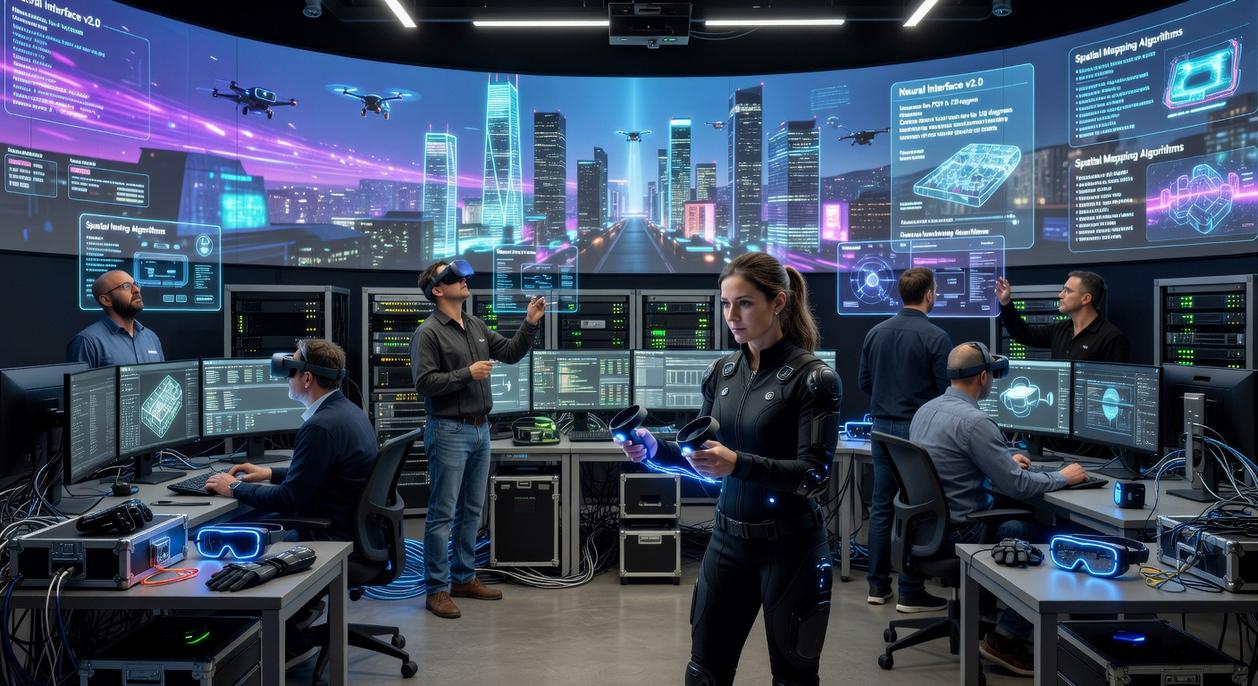
Advanced haptic feedback—technology that simulates touch, texture, and force—has moved far beyond rumble packs. Haptic suits and gloves can mimic resistance, impact, even the sensation of raindrops. Sony’s DualSense controller adjusts trigger tension to simulate drawing a bow or firing a jammed weapon. In short, your hands are no longer passive button-pressers; they’re participants.
Some critics argue this is gimmicky. After all, gameplay should matter more than hardware. Fair. But tactile feedback changes decision-making speed and emotional intensity (ask anyone who’s flinched in VR). When your body reacts, stakes feel higher.
Meanwhile, VR is finally shedding its “expensive tech demo” reputation. Lighter, standalone headsets with high-resolution displays eliminate the need for a high-end PC. Accessibility fuels development:
- Full-length narrative games instead of short demos
- Competitive multiplayer ecosystems
- Fitness and social platforms that extend beyond novelty
Here’s the contrarian take: VR’s mainstream moment isn’t about graphics. It’s about friction reduction. The easier it is to jump in, the faster adoption grows.
Then there’s Mixed Reality (MR), which blends digital elements with your real-world space. Imagine a strategy battle unfolding across your coffee table or an enemy ducking behind your couch. It sounds sci-fi (very Minority Report), but it’s here.
Skeptics say MR distracts from “pure” virtual escapism. I disagree. Blending realities expands tactical thinking and spatial awareness.
In the broader conversation about gaming technology trends, sensory immersion isn’t optional—it’s the next competitive edge.
The Unified Ecosystem: Seamless Cross-Play and Progression
Have you ever wondered why cross-platform play shifted from luxury to baseline expectation? Players grew tired of “walled gardens” (closed systems that restrict interaction with other platforms). Today, unified account systems and robust server architecture connect PlayStation, Xbox, PC, and mobile into one ecosystem. That’s not magic—it’s smart engineering shaped by gaming technology trends.
- Play with friends, no matter their device.
- Carry skins, stats, and saves wherever you log in.
Sound familiar? You start on console, finish on mobile—seamlessly. Skeptics say exclusivity protects quality. But does it really, or just limit freedom? Learn more at cross-play evolution.
What These Trends Mean for Your Next Gaming Session
We’ve covered the core technologies—from AI-driven worlds to cloud accessibility—that are actively building the future of gaming. The days of static, predictable experiences are numbered.
Here’s the contrarian take: not every leap in gaming technology trends automatically makes games better. Hyper-realistic graphics won’t fix shallow design (we’ve all played that gorgeous dud). What matters is smarter systems react to you.
Expect:
- Adaptive AI that studies playstyle
- Worlds that evolve between sessions
Next time you log in, you’re not starting a match; you’re stepping into world tuned to you.
Level Up Your Gamefront Strategy Today
You came here to sharpen your edge in Gamefront—whether that means mastering Lightnite battle royale mechanics, refining multiplayer tactics, or keeping up with gaming technology trends that are reshaping competitive play. Now you have the insights to adapt faster, think smarter, and compete at a higher level.
The difference between casual players and consistent winners is execution. Missed rotations, outdated loadout strategies, and ignoring evolving mechanics are the pain points that hold players back. Staying informed and applying expert-backed tactics is how you close that gap.
Here’s your next move: put these strategies into practice in your next matches, stay updated on the latest patches and gaming technology trends, and consistently refine your gameplay decisions. Players who actively study the meta and adapt are the ones who climb faster and win more.
If you’re serious about dominating Gamefront, don’t stop here. Dive deeper into advanced guides, track the latest updates, and apply pro-level tactics every session. The battlefield evolves daily—make sure you evolve with it.
 There is a specific skill involved in explaining something clearly — one that is completely separate from actually knowing the subject. Kaelith Kryndalla has both. They has spent years working with leveling and power-up tips in a hands-on capacity, and an equal amount of time figuring out how to translate that experience into writing that people with different backgrounds can actually absorb and use.
Kaelith tends to approach complex subjects — Leveling and Power-Up Tips, Gamefront News, Multiplayer Tactics and Modes being good examples — by starting with what the reader already knows, then building outward from there rather than dropping them in the deep end. It sounds like a small thing. In practice it makes a significant difference in whether someone finishes the article or abandons it halfway through. They is also good at knowing when to stop — a surprisingly underrated skill. Some writers bury useful information under so many caveats and qualifications that the point disappears. Kaelith knows where the point is and gets there without too many detours.
The practical effect of all this is that people who read Kaelith's work tend to come away actually capable of doing something with it. Not just vaguely informed — actually capable. For a writer working in leveling and power-up tips, that is probably the best possible outcome, and it's the standard Kaelith holds they's own work to.
There is a specific skill involved in explaining something clearly — one that is completely separate from actually knowing the subject. Kaelith Kryndalla has both. They has spent years working with leveling and power-up tips in a hands-on capacity, and an equal amount of time figuring out how to translate that experience into writing that people with different backgrounds can actually absorb and use.
Kaelith tends to approach complex subjects — Leveling and Power-Up Tips, Gamefront News, Multiplayer Tactics and Modes being good examples — by starting with what the reader already knows, then building outward from there rather than dropping them in the deep end. It sounds like a small thing. In practice it makes a significant difference in whether someone finishes the article or abandons it halfway through. They is also good at knowing when to stop — a surprisingly underrated skill. Some writers bury useful information under so many caveats and qualifications that the point disappears. Kaelith knows where the point is and gets there without too many detours.
The practical effect of all this is that people who read Kaelith's work tend to come away actually capable of doing something with it. Not just vaguely informed — actually capable. For a writer working in leveling and power-up tips, that is probably the best possible outcome, and it's the standard Kaelith holds they's own work to.