
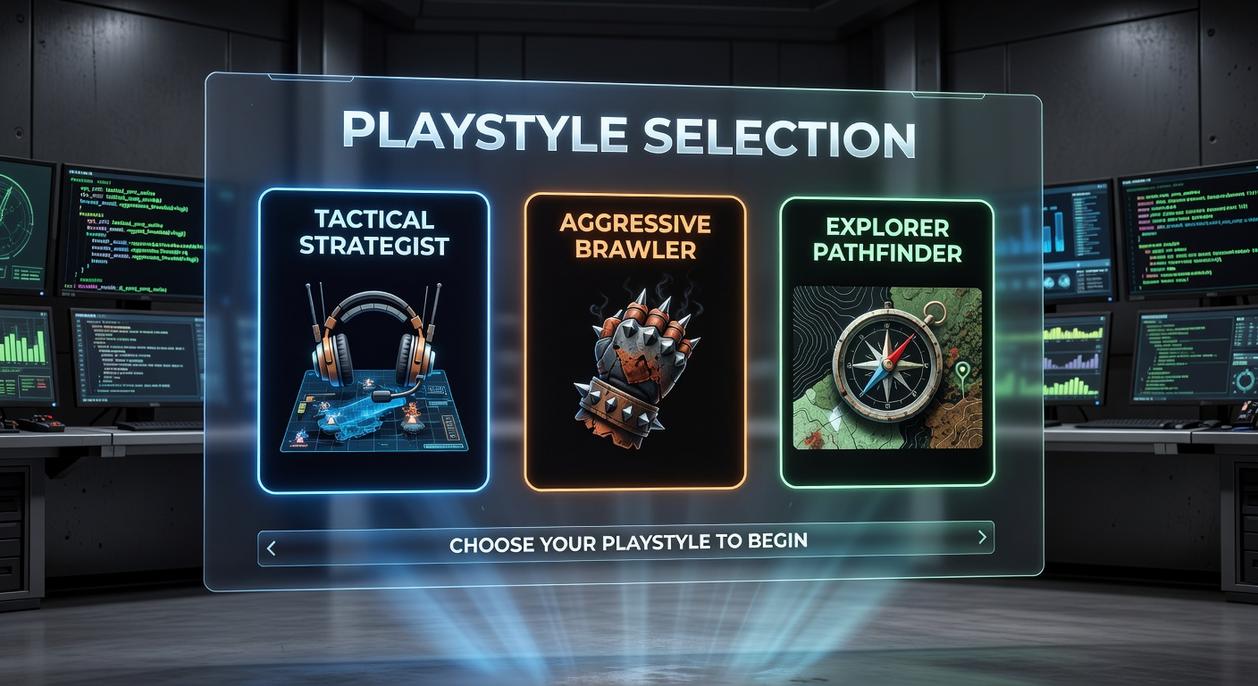
Every competitive multiplayer game forces a choice: go it alone or run with a team. This guide breaks down the real differences between solo queue vs squad play, helping you understand how each approach shapes your performance, mindset, and long-term enjoyment. Many players feel stuck or frustrated not because they lack skill, but because their natural playstyle clashes with their chosen mode. Drawing on thousands of hours across tactical shooters, battle royales, and team-based arenas, we compare the strategies, communication demands, and decision-making styles required for both paths—so you can identify your strengths and play to win.
There’s a certain electricity to dropping into a match alone. No pings in your ear, no last-second debates about landing zones, no one questioning your loadout choices. Every rotation, every risky push, every quiet retreat is yours. And honestly, I love that pressure. The freedom of the lone wolf means complete autonomy, total control over timing, positioning, and pacing. If you win, it’s because your mechanical skill, game sense, and decision-making aligned. If you lose, there’s nowhere to point but inward.
That clarity is brutal, yet refreshing. In solo queue vs squad play, the contrast feels stark. As a solo operator, you can pivot instantly. Spot a third-party opportunity? Take it. Sense a trap unfolding? Disengage without committee approval. This flexibility translates to speed, and speed wins fights. More importantly, victories feel pure—like landing the final blow in a boss fight straight out of Dark Souls (yes, that satisfying).
Still, let’s not romanticize it. The numbers game is real. Coordinated teams trade damage, share intel, and collapse on your position before you can reload. Get caught out once, and it’s often an instant trip back to the lobby. Moreover, your strategic depth shrinks. No elaborate flanks, no synchronized ultimates, no layered distractions. Your tactics are limited to what one pair of hands can execute.
Even so, I’d argue the constraint sharpens you. Without teammates to compensate, you refine positioning, timing, and awareness faster. Pro tip: review your solo losses; patterns emerge quickly. Ultimately, going alone isn’t easier. It’s harsher, faster, and less forgiving. But when you carve out a win by yourself, it feels undeniably earned. And for players craving growth, that crucible can be the ultimate proving ground in battle royale arenas.
Strength in Numbers: The Power of a Coordinated Squad
There’s a reason coordinated squads feel unstoppable. When a team truly clicks, it becomes more than the sum of its parts—a concept known as synergy (when combined effort produces greater results than individual contributions alone). I learned this the hard way after trying to hard-carry matches like some action-movie hero. Spoiler: it rarely worked.
Advanced Tactics and Role Specialization
First, let’s talk roles. In structured team play, you’ll often see dedicated positions like entry fragger (the first player to initiate fights), support (utility and backup), and sniper (long-range control). Separately, they’re strong. Together, they’re surgical.
However, I once made the mistake of ignoring role balance—five aggressive players, zero coordination. We overwhelmed no one and folded under pressure. The lesson? Specialization only works when players trust each other to cover weaknesses.
Equally important is information dominance. A coordinated squad gathers, shares, and acts on intel faster than any solo player can. Callouts about rotations, resource drops, or flanks translate directly into smarter positioning and, ultimately, better map control. In fact, mastering these map control strategies that win more multiplayer games can dramatically increase your win rate.
That said, it’s not all upside.
Communication is the make-or-break factor. Vague callouts or toxic chatter can sink morale before the first engagement. I’ve seen teams implode over ego alone (and yes, I’ve been part of that problem).
Then there’s shared failure. In solo queue vs squad play, your performance can be neutralized by one weak link. It’s frustrating—but it also forces accountability.
Ultimately, the squad’s power lies in trust, clarity, and adaptation. Without those, it’s just five players wearing matching skins.
The Tactical Toolbox
First, let’s define terms. Solo skills are self-sufficiency abilities—advanced movement (precise control of positioning and momentum), 1vX clutch potential (winning against multiple opponents), rapid information processing, and decisive action under pressure. In solo queue vs squad play, these skills often decide whether you survive the opening minutes.
“I don’t need comms; I need control,” one high-ranked player told me. That mindset highlights exceptional situational awareness—the capacity to read sound cues, map flow, and enemy patterns in real time. Research on expertise shows elite performers chunk information faster, enabling quicker decisions (Ericsson, 2018).
However, team skills flip the script. Interdependence means active listening, concise callouts, and trusting a teammate’s rotation even if you’d choose differently. “Play your role,” a coach once said. “Even if it’s boring.” Discipline, after all, wins championships (just ask Overwatch League analyst).
On the other hand, critics argue pure mechanical skill carries harder. Sometimes it does. Yet developing solo mastery makes you a safer anchor—less likely to panic (and nobody likes the panicked sprinter). Conversely, embracing team dynamics sharpens positioning and game sense when alone.
Pro tip: review comms recordings to spot hesitation.
Ultimately, the best competitors build both toolkits—and know when to switch.
Finding Your Fit: How to Choose Your Ideal Playstyle
First things first, ask yourself what you actually want. Are you grinding to climb the ranked ladder as efficiently as possible, or just logging in to test your limits after work? One teammate once told me, “If I’m sweating this hard, I better see my rank go up.” That’s goal clarity in action.
In competitive systems, team play (coordinated matches with pre-made allies) often boosts consistency. By contrast, solo play means entering matches alone and adapting on the fly. The debate over solo queue vs squad play isn’t just preference—it’s strategy.
Next, consider the game type. In battle royales, going solo is a legitimate mode with its own pacing and risk-reward rhythm. However, in objective-based tactical shooters, queuing alone against a coordinated five-stack can feel like bringing a spoon to a sword fight (technically possible, emotionally exhausting).
Personality matters, too. Ask yourself:
- Do you enjoy calling strategies and directing teammates?
- Or do you prefer silent focus and instinct-driven plays?
“I’d rather trust my aim than five randoms,” a friend joked. Fair—but teamwork teaches macro-strategy (big-picture decision-making across the map).
Ultimately, try both. Solo sharpens mechanics; squads build coordination. The most adaptable players can thrive anywhere.
Mastering the Battlefield, Your Way
You came here to figure out whether solo queue vs squad play truly makes a difference—and now you know the answer. Neither path is superior. The real issue has always been the frustration that comes from forcing yourself into a playstyle that doesn’t fit your instincts or goals.
When your approach clashes with the game’s demands, performance drops and enjoyment follows. But when you intentionally choose the style that matches your strengths, everything clicks.
Ready to win more and tilt less? Jump into your next match and apply these insights. Test a new mindset today—and start playing smarter, not harder.
 Bill McNeestavo has opinions about leveling and power-up tips. Informed ones, backed by real experience — but opinions nonetheless, and they doesn't try to disguise them as neutral observation. They thinks a lot of what gets written about Leveling and Power-Up Tips, Gamefront News, Expert Breakdowns is either too cautious to be useful or too confident to be credible, and they's work tends to sit deliberately in the space between those two failure modes.
Reading Bill's pieces, you get the sense of someone who has thought about this stuff seriously and arrived at actual conclusions — not just collected a range of perspectives and declined to pick one. That can be uncomfortable when they lands on something you disagree with. It's also why the writing is worth engaging with. Bill isn't interested in telling people what they want to hear. They is interested in telling them what they actually thinks, with enough reasoning behind it that you can push back if you want to. That kind of intellectual honesty is rarer than it should be.
What Bill is best at is the moment when a familiar topic reveals something unexpected — when the conventional wisdom turns out to be slightly off, or when a small shift in framing changes everything. They finds those moments consistently, which is why they's work tends to generate real discussion rather than just passive agreement.
Bill McNeestavo has opinions about leveling and power-up tips. Informed ones, backed by real experience — but opinions nonetheless, and they doesn't try to disguise them as neutral observation. They thinks a lot of what gets written about Leveling and Power-Up Tips, Gamefront News, Expert Breakdowns is either too cautious to be useful or too confident to be credible, and they's work tends to sit deliberately in the space between those two failure modes.
Reading Bill's pieces, you get the sense of someone who has thought about this stuff seriously and arrived at actual conclusions — not just collected a range of perspectives and declined to pick one. That can be uncomfortable when they lands on something you disagree with. It's also why the writing is worth engaging with. Bill isn't interested in telling people what they want to hear. They is interested in telling them what they actually thinks, with enough reasoning behind it that you can push back if you want to. That kind of intellectual honesty is rarer than it should be.
What Bill is best at is the moment when a familiar topic reveals something unexpected — when the conventional wisdom turns out to be slightly off, or when a small shift in framing changes everything. They finds those moments consistently, which is why they's work tends to generate real discussion rather than just passive agreement.